Parkour. Tumbling. Trampoline. A structured beginner program where kids build confidence, coordination, strength, and body control through an 8-week training cycle.
NinFit Beginner is Elemental 5's foundational youth program for ages 5–12. Students train parkour, tumbling, and trampoline together in one class, building the physical tools that support long-term athletic development.
This is not random open gym time. Each week has a specific focus, each class follows a clear rhythm, and coaches use the same progression language across the program.
Students learn how to jump, land, roll, vault, swing, climb, tumble, bounce, and move with control. Along the way, they also learn how to listen, take turns, work through frustration, and keep showing up.
NinFit Beginner runs on an 8-week training cycle. Each week gives coaches a clear focus and gives students repeated exposure to the foundational skills they need most. The cycle keeps class organized without making it feel rigid. Students can enter at any time and still get a complete experience over the full rotation.
A NinFit class should feel active and fun, but never random. The rhythm gives coaches control and gives students enough repetition to actually improve.
Movement games, crawling, jumping, mobility, and basic strength patterns prepare the body and help coaches read the room.
Coaches introduce the weekly anchor, demonstrate the standard, and give simple cues students can actually remember.
Students rotate through parkour, tumbling, trampoline, bar, vault, wall, or floor stations based on the weekly focus.
Coaches watch for readiness, consistency, confidence, control, and whether a student is ready for more structured progression.
Every class closes with a short character conversation tied to the Elemental 5 framework.
NinFit Beginner is intentionally mixed-age and mixed-ability. A 5-year-old beginner and an 11-year-old beginner may be in the same class, but they are not expected to progress the same way.
Some students are here for confidence, coordination, and fun. Some students become deeply motivated by skills, levels, and measurable progress. NinFit is designed to serve both.
Coaches pay attention to readiness over age. When a student shows consistent control, focus, and interest, they may begin working more directly through the NinFit level pathway.
Students progress through what coaches consistently see in class, not one lucky rep or one pressure-filled test day.
Age matters less than attention, safety, control, and willingness to work through the process.
The class stays recreational and accessible while still giving motivated students a serious pathway forward.
The NinFit booklet is a progression tool for students who are ready for more structure. It gives athletes a clear view of the skills connected to Levels 1–3 and helps coaches track when those skills are showing up consistently in class.
The booklet is not a pressure system and it is not a race. It is a way to help motivated students understand what they're working toward and give families a clearer window into their progress.
Skills are signed off when coaches see consistent mastery, not one lucky rep. The goal is not to rush through the booklet. The goal is to build real ability.
These are the levels where students learn how to train, how to control their bodies, and how to build real movement capacity before moving into a more demanding training environment.
Students learn safe contact with the ground and equipment. Jumping, landing, rolling, basic bar work, tumbling shapes, and trampoline control are introduced from the ground up.
Students begin adding distance, commitment, and stronger movement patterns. Skills become more dynamic while still staying grounded in control.
Students begin linking movement together with rhythm and adaptability. This is where basic competence starts becoming flow and students prepare for the next training environment.
Levels 1–3 are developmental. The Level 3 to Level 4 transition is the first formal assessment in the NinFit pathway. Students who reach that point may be invited into Intermediate NinFit, where training becomes more technical, more focused, and more connected to competition-style movement.
Does my child need experience?
No. Level 1 is built for beginners. If your child can follow directions, participate safely, and wants to move, they can begin.
Does every student use a booklet?
No. The booklet is used when a student is ready for more structured progression. Some students need time to build confidence and class habits first. Coaches help determine when the booklet becomes useful.
How does my child level up?
Students level up through coach observation. Skills are signed off when coaches see consistent control in class. It is not based on one test day or one lucky attempt.
Can younger kids keep up with older kids?
Yes, because the class is coached by readiness, not just age. Younger students may work on simpler foundation goals while older or more ready students work through level skills.
What does a typical class look like?
Classes include warm-up, a weekly skill focus, training rotations, coach observation, and a short mat chat. The weekly curriculum follows an 8-week cycle.
What happens after Level 3?
Level 4 is the beginning of Intermediate NinFit. It requires a formal assessment and represents a real shift in skill standard, focus, and commitment.
NinFit Beginner is the starting point for students who want to build strength, confidence, coordination, and real movement skill.
Progress Tracker for Levels 1–3
This high-quality spiral-bound booklet helps students track their progress through our beginner NinFit levels. It covers key skills in parkour, tumbling, and trampoline — with coach sign-off areas and testing readiness pages built right in.
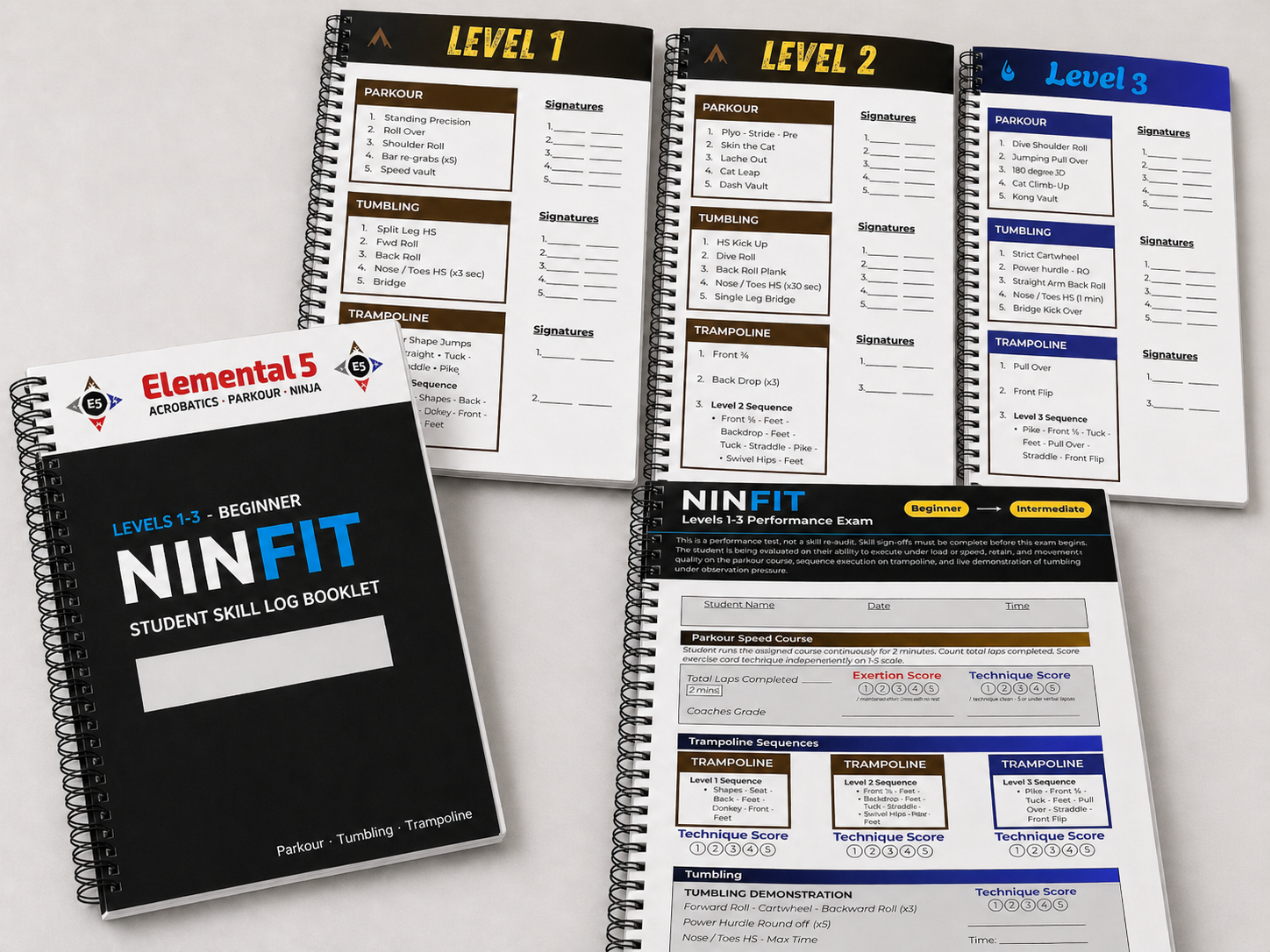
The booklet does not create progress. It helps students see the progress they are already building.
Ask a coach at the front desk or bring the booklet to class when your student is ready to start tracking their journey more intentionally.